Thursday, February 4, 2016

Reading Log Questions #1

1) What is the meaning of the Good Lord Bird? What does it represent? How does it connect to the title of the book?

The Good Lord Bird symbolizes having understanding and thus being at peace while simultaneously representing the liberation that accompanies this new understanding of the world. Most commonly, birds are used to depict ideas of freedom, and the Good Lord Bird is no exception. Since its feathers are believed to give understanding to the troubled people who need it, it can also be said that the feathers give people a chance to be free, like it is, from stress, worry, and doubt. On page 33, Frederick, who is unable to convey his thoughts clearly, says that gaining the "understanding that'll last your whole life" comes from the "memories and things" that are illustrated more clearly with the help of the Good Lord Bird's feather (McBride 33). The "memories and things" are synonymous with the experience a person gets from living life, which, when applied, can "last your whole life." The concept of the Good Lord Bird relates to the overall theme of the novel and its title by acting as a metaphor for the clarification each of the characters need in each of their own situations. Because lying is a major theme of The Good Lord Bird, this need for understanding is crucial and the Good Lord Bird provides that new, broader perspective that the characters need when confronting their blurry lives.

Cage for bird

2) What is Henry's nickname? How did he earn it?

Henry got his nickname, Little Onion, from Old John Brown as a way of thanking Henry for reminding him what God values in a man. Although Henry acted on a misunderstanding, Old John Brown took Henry biting into his onion charm to mean that Old Man should not hold materialistic items with such value and should do away with such objects just as Henry metaphorically showed him by eating his onion charm. Old John Brown compares the act to "Jesus Christ [who] munched on the sins of the world so that [Henry and he] might live" (McBride 24). Because Old John Brown is so religious, it was easy for him to turn a teaching from the Bible into something he was experiencing in the moment, and having learned a lesson, presented Henry, the person who enlightened him, with a special nickname.

The Magic Onion

3) What was Henry's rationale for continuing to live a lie? Was it justifiable?

Throughout the beginning of The Good Lord Bird, Henry is obsessed with the idea that he is helpless as Old John Brown's prisoner. Henry takes this to another level when he continues to lie about his gender because he believes that it will protect him from the evil nature of Old John Brown, a man who tells Henry, "You just as free as the birds run" (McBride 29). Because Old John Brown tells Henry that he has rescued him from slavery, his actions are not justifiable and are just an excuse to avoid the confrontations he might have to make, like fighting or providing labor, should he transition back into male.


Monday, February 1, 2016

Permissible Lies Response

Depending on the time period, the people involved, and the consequences, it can be permissible to lie. To society, lying is an unethical act that can be avoided at all costs; however, this polarized way of thinking is not always applicable and it should be known that there are always exceptions to societal rules. During times of inequality, it was common for people to employ a technique called “passing” to get away with being a person of another race or gender. Although it was considered unfair to others to lie in this way about an identity, during times of adversity, it would be understandable to implement this survival tactic. In regards to when it is admissible to lie, context is everything. If a person is faced with obstacles, irrational people, and a society that will take no excuses, it is, in hindsight at least, acceptable to either lie by omission or lie outright. In The Good Lord Bird, Henry Shackleford and his father kept quiet about Henry’s actual gender to avoid additional hardships that would naturally come for a black male during this time period. Today, it is still common to lie by omission to avoid harsher punishments; because African-Americans are often targeted by police, they try to come off to others with a “caucasian” demeanor. Although on a smaller scale, the argument on when it is okay to lie is still applicable here and could result in a lesser punishment by officials. To entirely prohibit the act of lying, without gaining any understanding of the situation, is unfair in itself and could cost someone their well-being in extreme situations.

Wednesday, January 27, 2016

Getting to Know Samantha Settembrino

Samantha Settembrino
ENGW 1101_3G
January 26, 2016
Professor Young

Getting to Know Samantha Settembrino
 
 
1) If you play a sport, what type of sport do you play? How long have you been playing this sport?
 
The last time I played a sport, I was around 7 years old. I played soccer and I was also practicing gymnastics. I have since realized that I am not at all coordinated and have no athletic abilities that can be focused onto a specific sport, and thus, I read books and nap.


2) What are you passionate about? For example, in your free time, what do you enjoy doing most?

I am most passionate about whatever I am putting my mind to in the moment. Some days it is school work and other days it is work at The Gap, but I am always giving my full attention and energy to the tasks at hand. I think I am most passionate about completing jobs to the best of my ability and thus my passions vary depending on the situation.


3) What is the most ridiculous lie you ever told? Why did you tell this lie?

The most ridiculous lie I have ever told happens to be the most recent lie I told to my mother. I told her that I went to New York for the weekend when I was really in Rhode Island with my girlfriend. I told this lie because I knew I would definitely get permission to leave if the destination was closer to New Jersey than Rhode Island.
 
4) When you write, do you just sit at the computer and allow the words to flow or do you have an outline?
 
Up until last summer, I thought that successful compositions were only produced from thorough outlines and that to write freely was to ramble. Then, my English professor compared one of my favorite styles of writing, stream of consciousness, to focused freewriting, and I began to practice both forms of writing papers for school.


5) How would you describe your writing experience so far? What do you most want to learn from this course?

So far, because of my ability to delve deeply into whatever prompt is assigned to me, I have enjoyed every part of my writing experience. I consider each new assignment as an opportunity to better my writing skills and therefore am eager to try new things. In this particular course, I most want to learn how to speak more fluently and precisely which I can accomplish by writing more and practicing using my writing voice.
 
6) What was the name of the most recent book you've read from cover to cover?
 
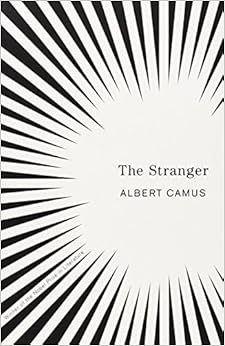
The last book I read from cover to cover was The Stranger by Albert Camus and a few short stories by Kurt Vonnegut entitled "Where I Live," "Harrison Bergeron," and "Who Am I This Time?"


7) How often do you write on social media: Facebook, Twitter, SnapChat, Instagram?
 
Because I only recently created social media accounts, I rarely post on these sites but I have realized that there are usually a significant amount of articles posted by other users that I read.


8) What is most important for you to learn this semester?

This semester, it is most important for me to learn how to say more in fewer words. I want to learn how to make each and every one of my words precise so that I don't have to use more sentences later to expand upon aforementioned thoughts.
 
9) What is your definition of a hero?

I define a hero as someone who acts selflessly and courageously to provide something, either tangible or intangible, to someone in need. The acts can range from small to big but are consistently significant to others and are important in maintaining the wellness of another.


10) When was the last time you failed at something? What did you learn from this experience?

Last semester, I went on a medical leave of absence and was unable to complete my classes. I believed that I had failed as a student and the person I envisioned myself to be and ultimately felt defeated. What I learned from this experience, however, was more important than what I could have possibly learned in class. I learned how to take care of myself in several aspects to avoid a poor performance academically; and though it took me a couple of months, I quickly realized that there are areas of your mind that need to be healthy in order for the rest of your brain to be fully active during the school year.


11) Rate yourself as a writer: A, B, C or D. Explain why.
 
As a writer, I would rate myself with the letter B because although I have come a long way and consistently put a lot of effort and thought into each sentence I write, I still have a lot left to develop and to learn.